MACAM - Museu de Arte Contemporânea Armando Martins
Lisboa
While the character of Juliet, protagonist of William Shakespeare’s tragedy Romeo and Juliet, has become a universal icon of romantic love, reducing her to the image of a young woman in love and victim of fate is to limit her complexity. In the second act of the play, Juliet utters the famous phrase: “Deny your father and renounce your name,” thus transcending the romantic dimension and revealing the transformative power of language as a gesture of emancipation. By proposing to renounce her name, Juliet questions her family heritage, the imposed ties of identity associated with it, as well as the symbolic order that sustains patriarchal society. With this imminent rupture, she shows that name and identity are not immutable, but social conventions that can be transformed or rejected. As a possibility for liberation, it opens space for rebirth and a possible reconfiguration of identity, outside the hereditary, social, and symbolic bonds that impose expectations, norms, and limitations.
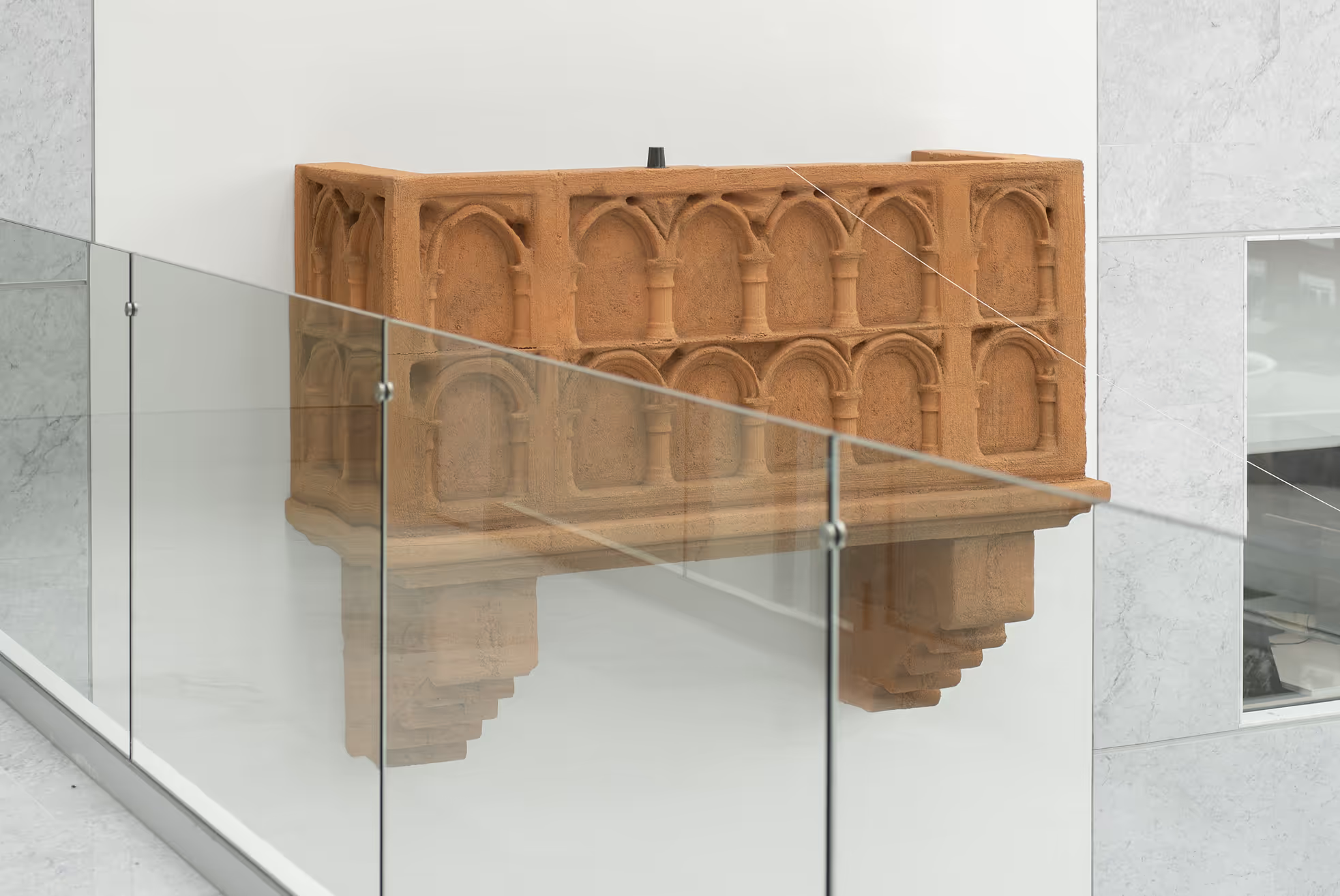
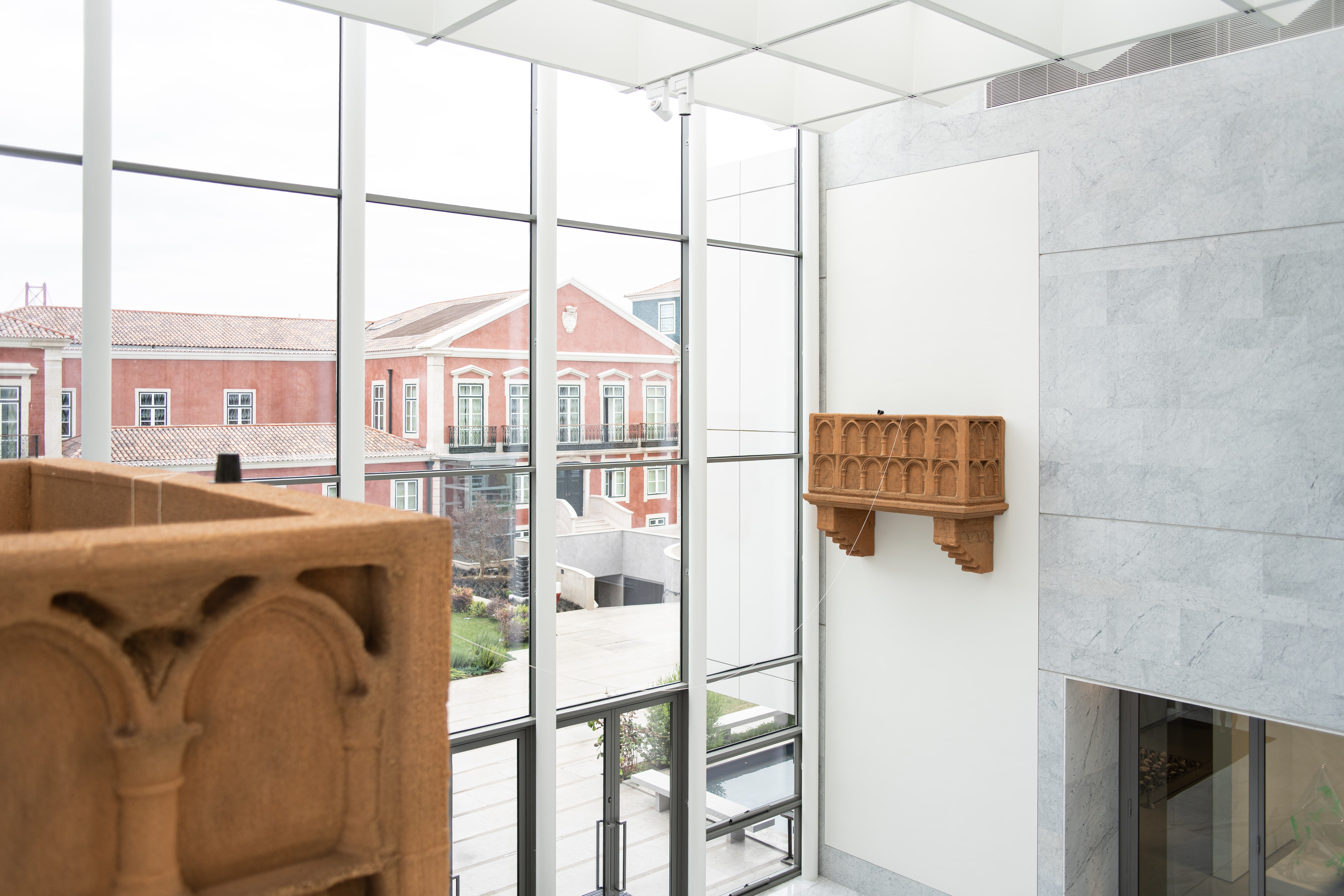
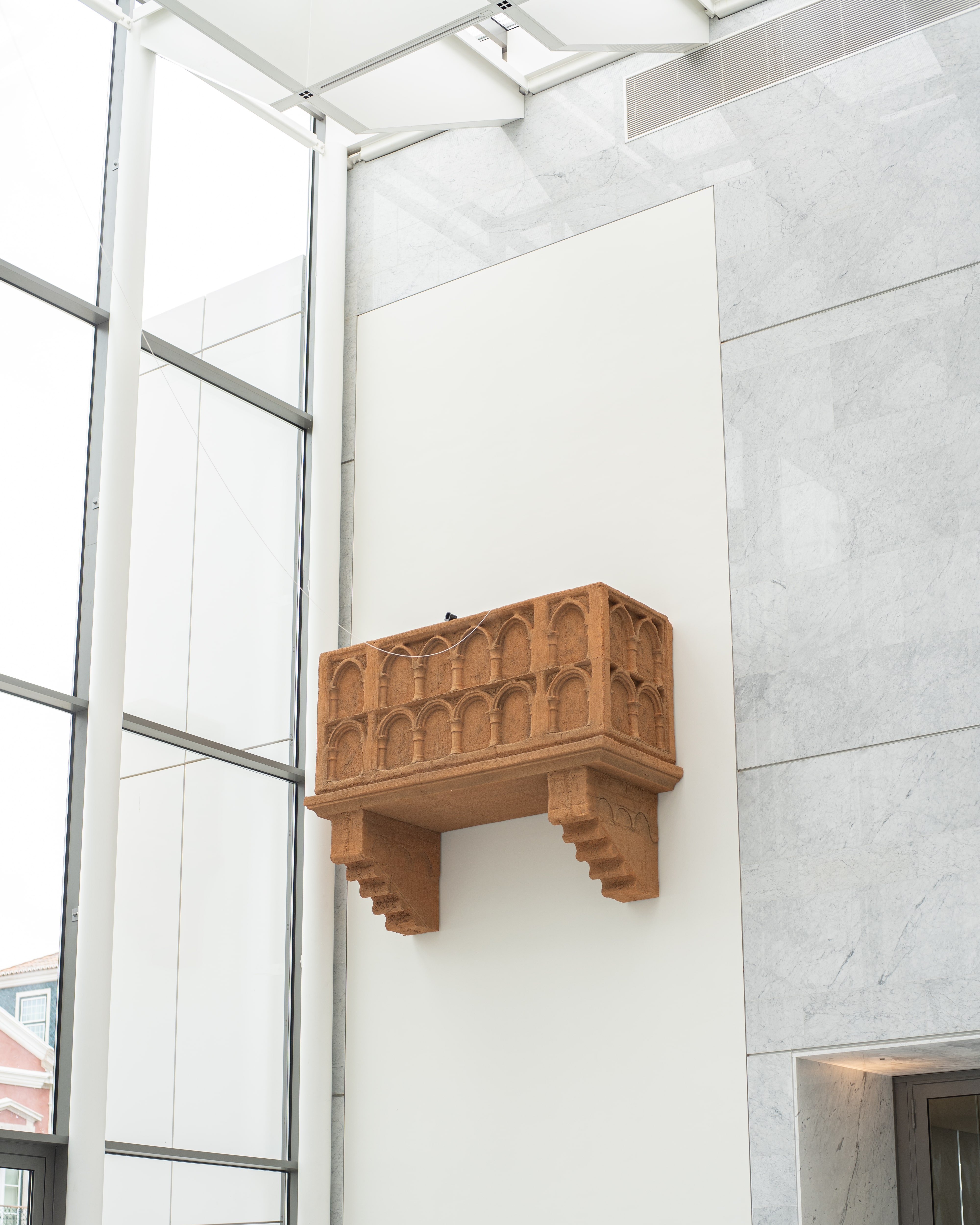
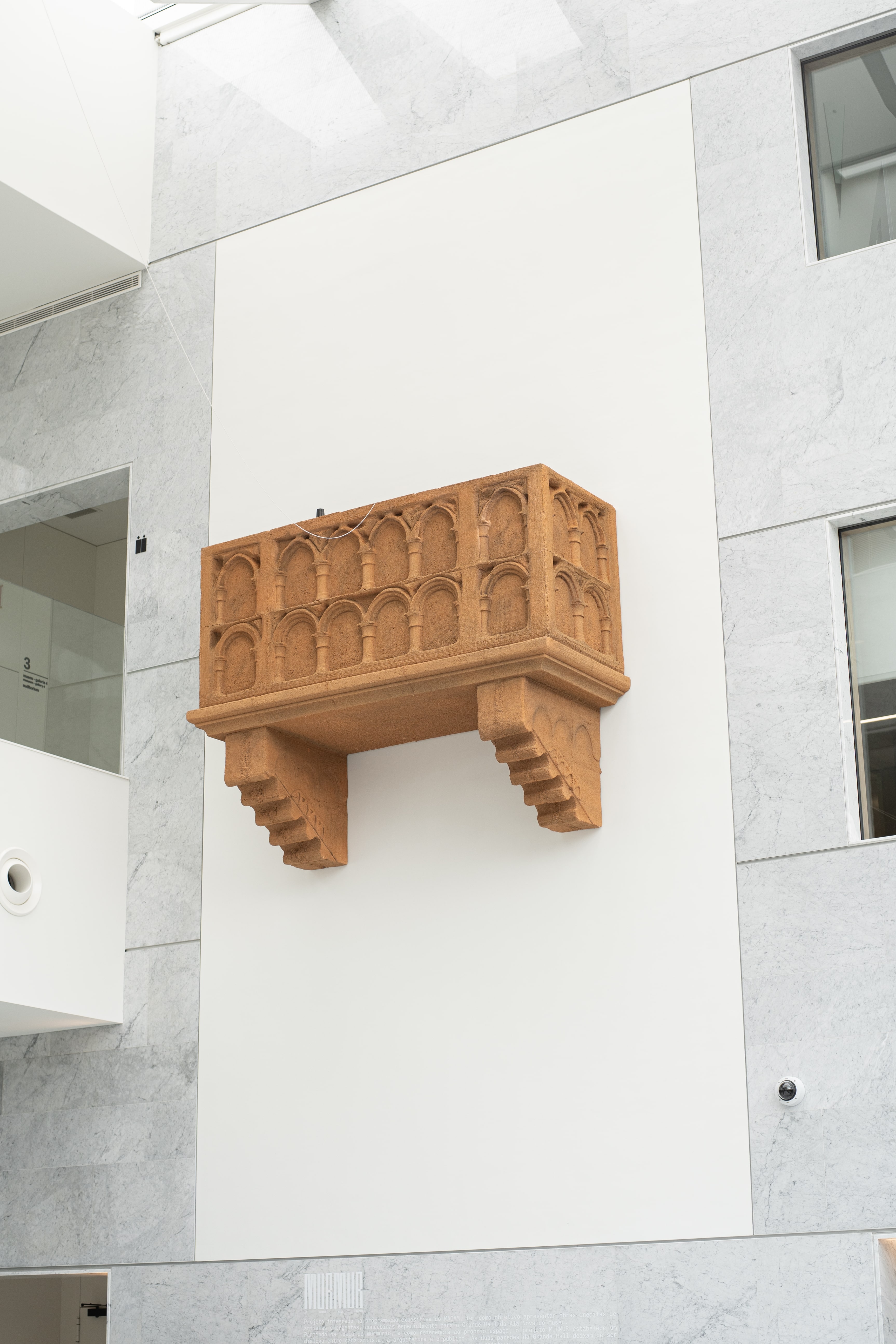
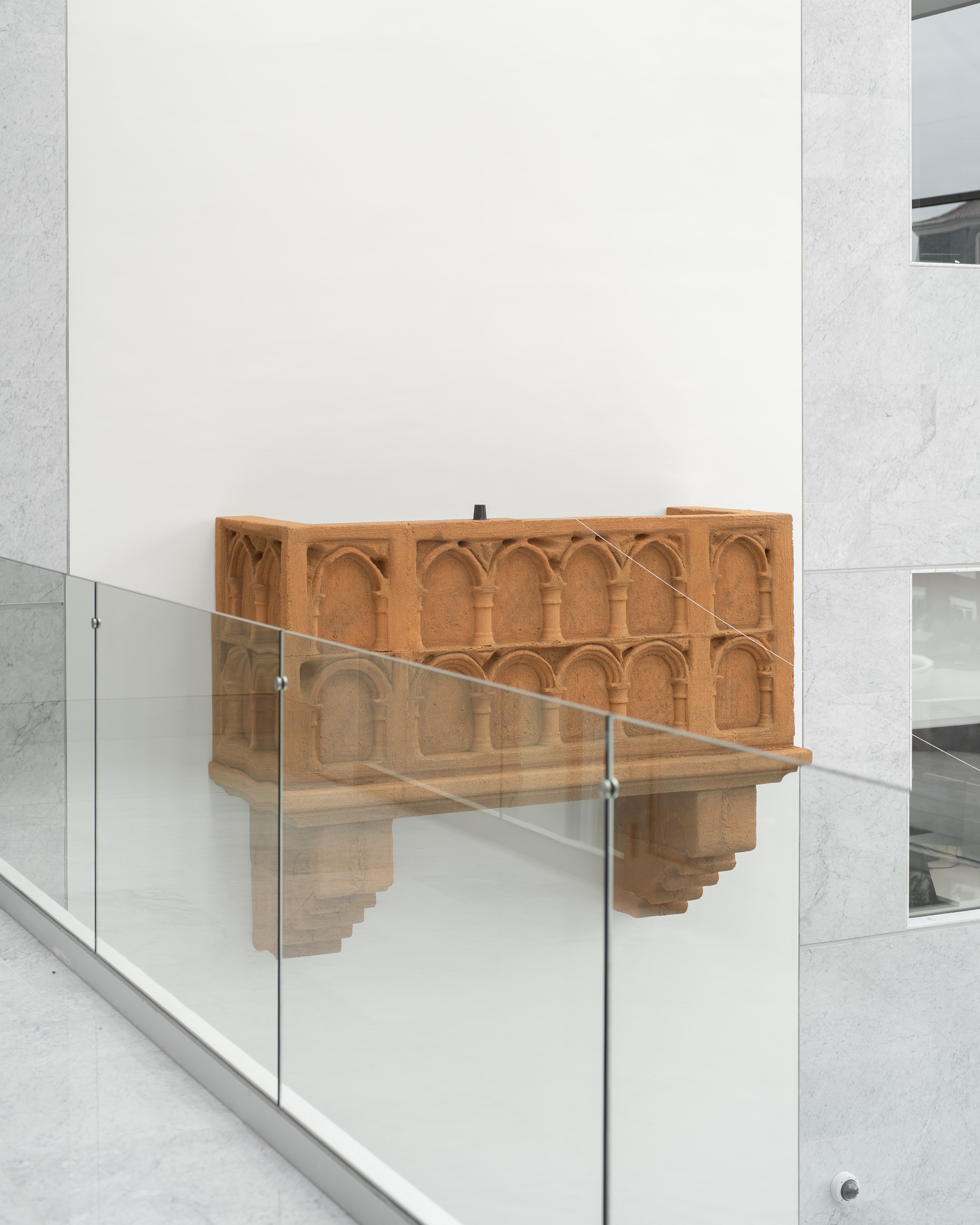
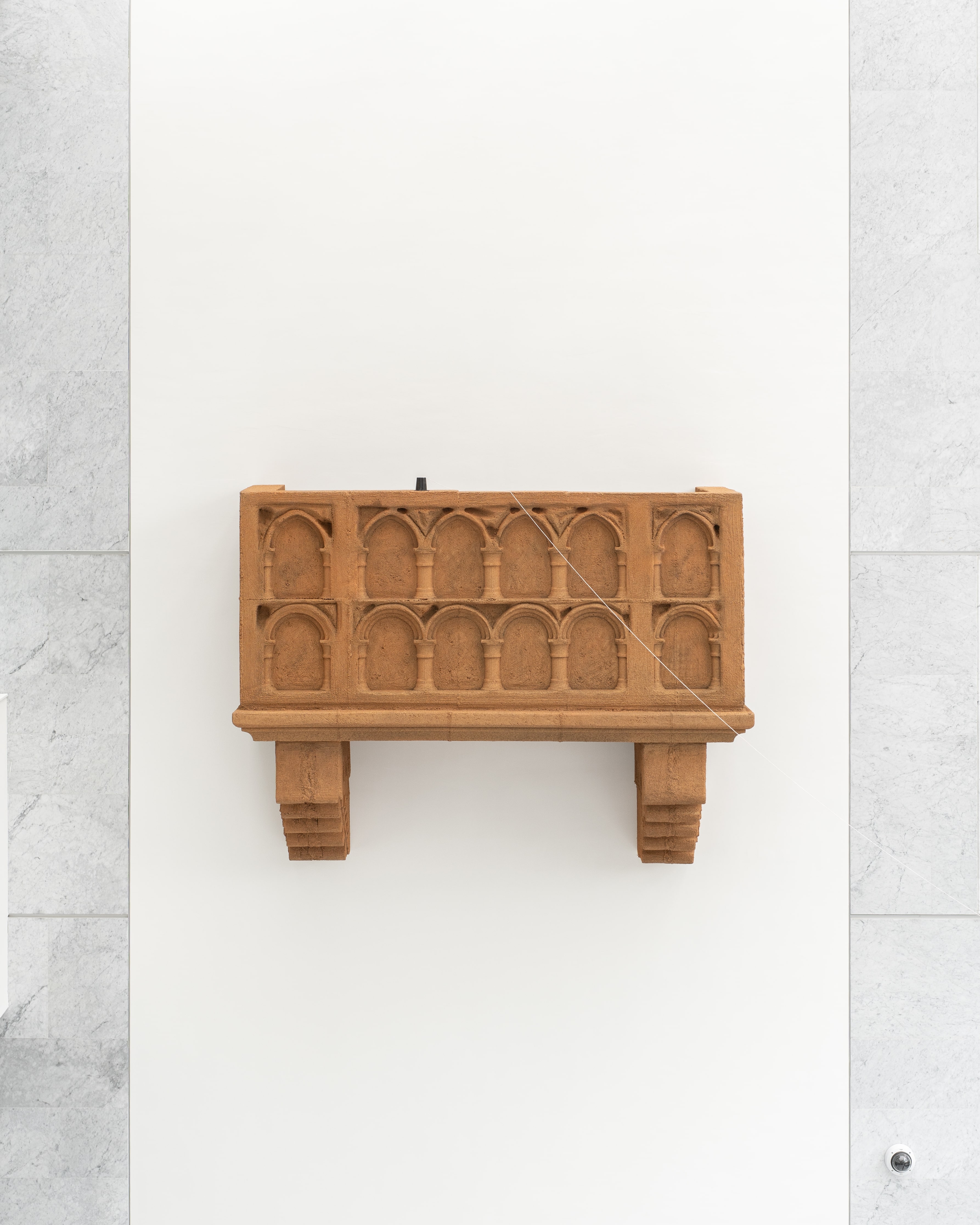
It is from this reading that Isabel Cordovil presents Juliet and Juliet, an installation in which she recreates the famous and widely recognisable balcony of Juliet, located in the city of Verona, Italy. In the exhibition space, alongside this balcony, she creates its duplicate, simultaneously evoking the possibility of the existence of two Juliets.
Without retelling Shakespeare’s story, Cordovil isolates this character and her archetype, removing her from her original narrative and reinserting her into a speculative space where she is not the object of fate, but rather the subject of discovery and openness. Juliet is, in this sense, the figure who denaturalises the established order and proposes a radical gesture: love as a possibility for reinventing the self. On the other hand, presenting two balconies, which presuppose two Juliets, invokes the themes of the double and of mirroring: the fragmentation of the self and internal multiplicity, or the encounter with another who is simultaneously a reflection, confrontation, and complementarity.
In the installation, the dialogue between the two characters, or the symbolic space they occupy, is materialised through an apparently simple device—two yogurt cups joined by a string—an element that refers to the innocent attempt at contact that many of us may have used during our youth, as well as to the paradox of its ineffectiveness. In this sense, this duplicated image can be seen as a loving and desirous relationship between two women, but also as a mirroring relationship, in which the subject unfolds upon itself, recognises itself, and reinvents itself. Thus, Juliet and Juliet operates in an ambivalence: while representing a love that challenges the binary and heteronormative model, it also reflects on the construction of the self through the other. Love, in this context, is simultaneously intimate and reflective, relational and internal. The double embodies the tension between loving oneself and opening up to the other, thus reconfiguring the very notion of identity, since, if the name and family heritage seemed to fix the subject, here it becomes fluid, expansive, and in constant reconstruction. Juliet and Juliet by Isabel Cordovil seeks to reflect on love and otherness outside of social impositions, inhabiting a space where authenticity and freedom find expression. Love as an act of truth, resistance, and creation.
Carolina Quintela