Appleton Box
Lisboa
Hope is an attitude, a mood, that contains much more than rational components, combining desires, beliefs and possibilities for the future. Hope, therefore, is composite in nature: we must both want and believe in the desired outcome. It is a sophisticated ability embedded in the human psyche, and its absence – hopelessness – presents itself as a serious pathological projection to which psychopharmacology offers increasingly comprehensive solutions. A body without hope cannot survive.
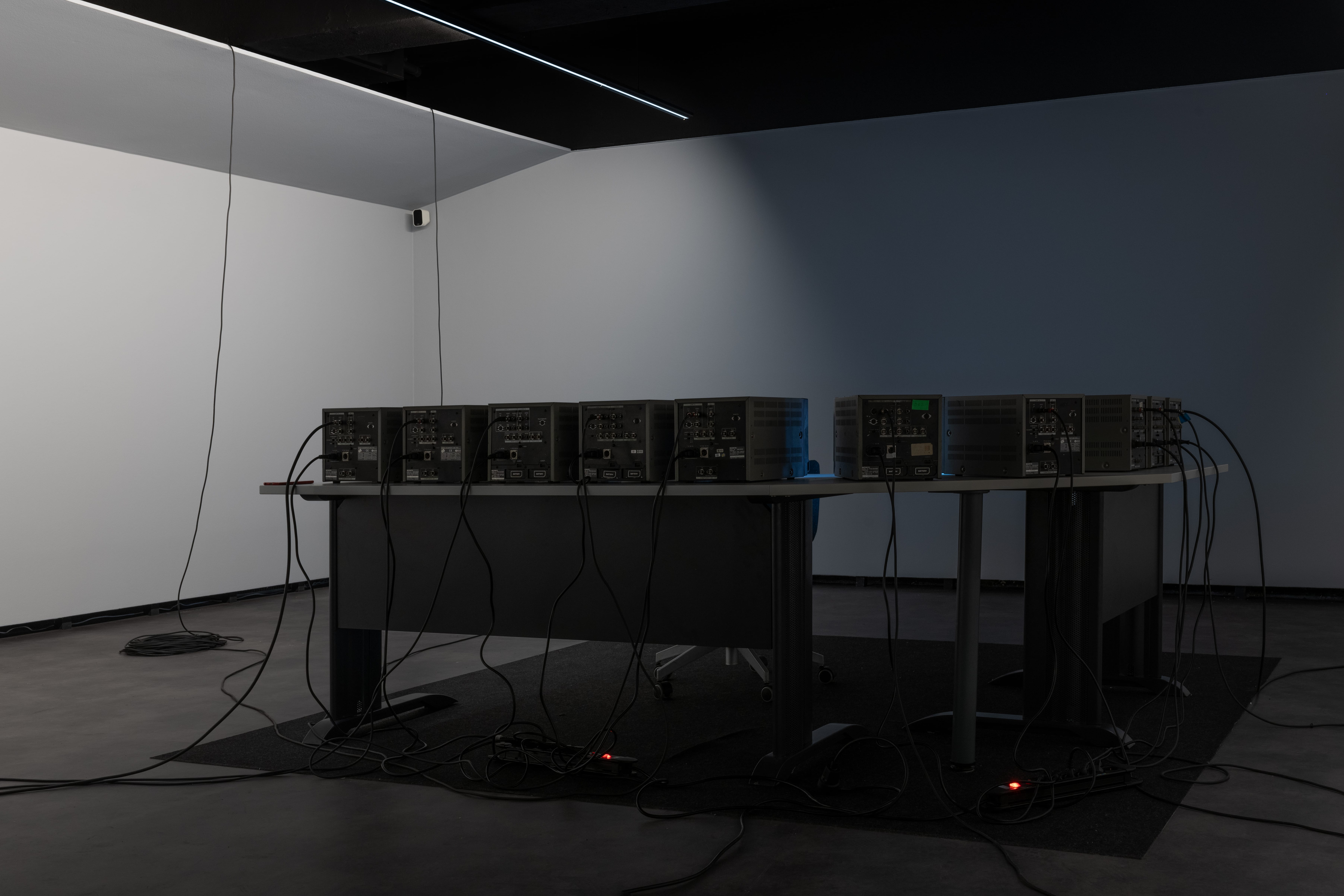
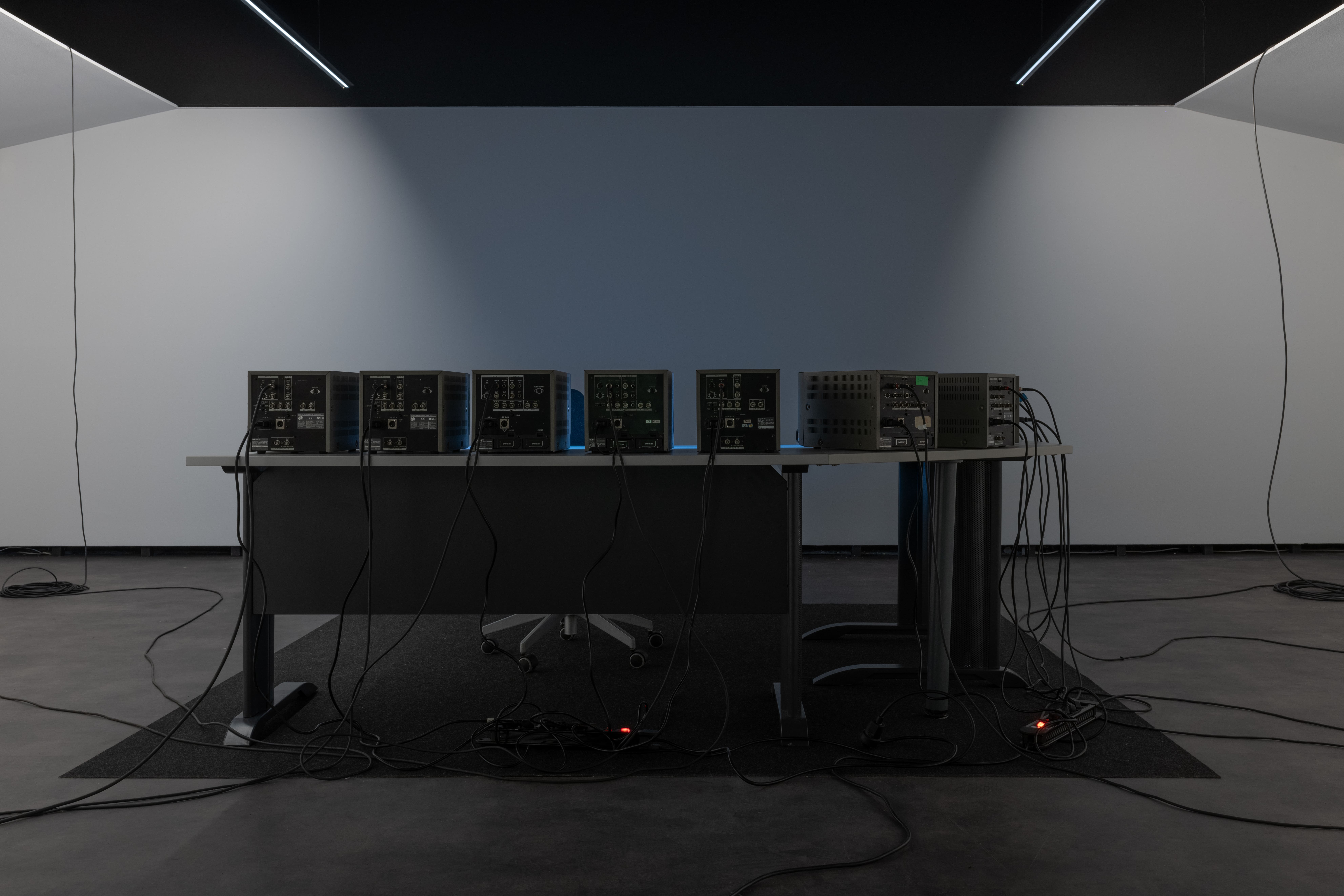
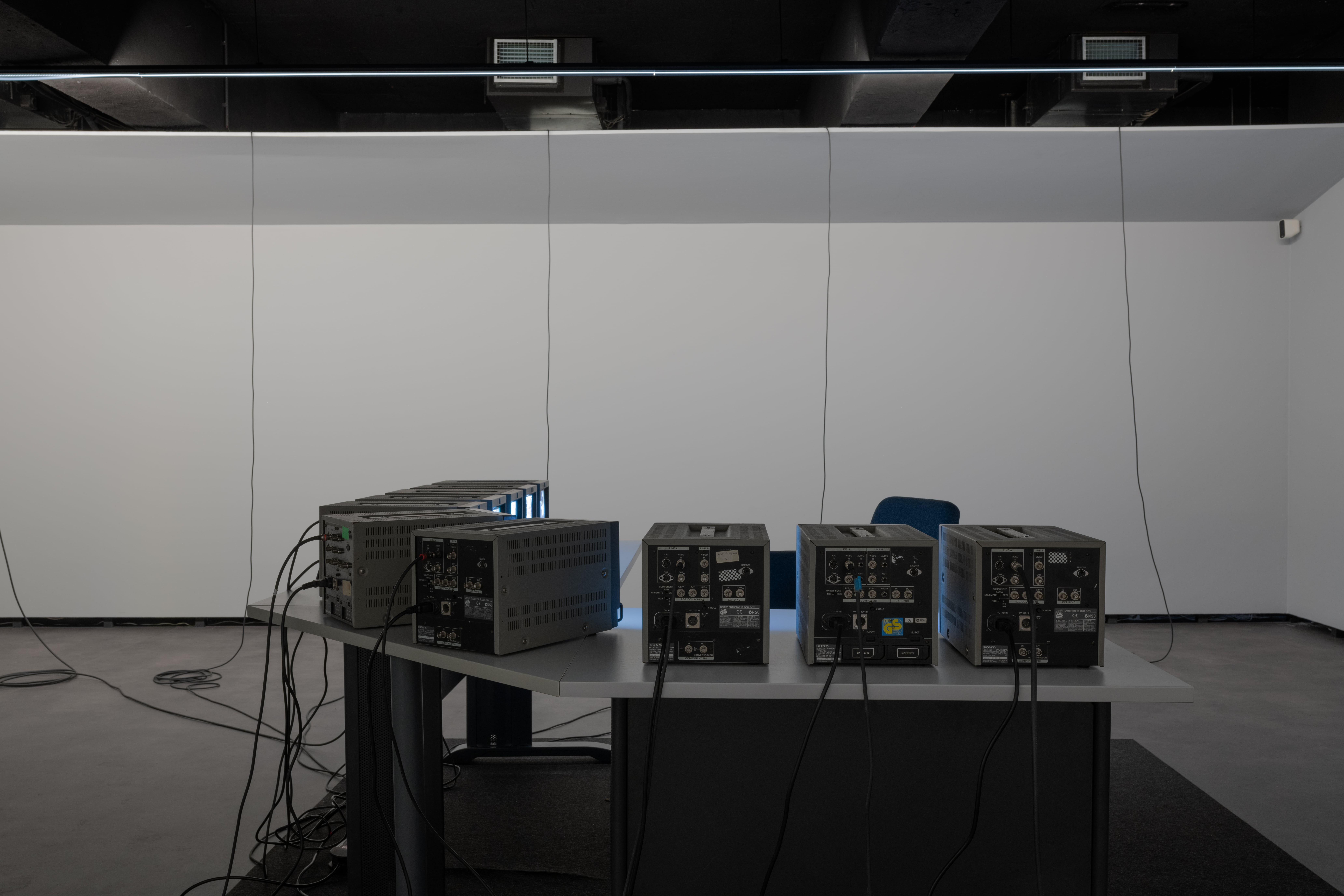
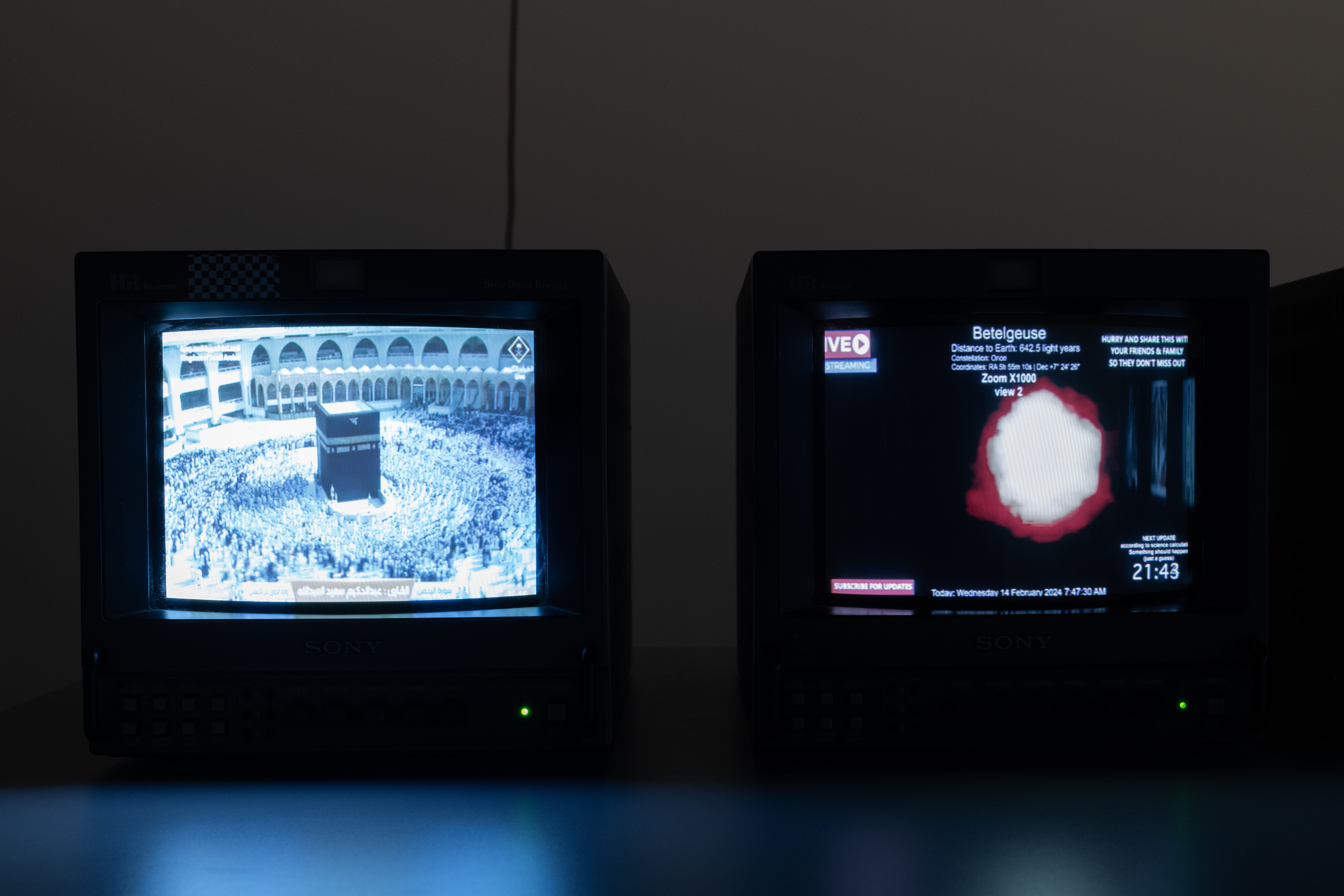
Isabel Cordovil, an artist whose work is inscribed in the interstices between life and death, always investigates the monumental or monumentalist power of objects, moments or situations. In A Torch Song, the artist forces us to contemplate hope at a moment when vigil, that voluntary act of being awake in connection with worship, ritual and demonstration, becomes an obligation to keep watch. In a grey room (in all senses), we find a grey desk and a grey chair. On the desk, various small screens, clearly technologically obsolescent, but recalling mobile phone screens, broadcast a stream from places where a miracle has taken place (for example, Fátima, Mecca, the Nevada desert, where aliens might land, or somewhere in Finland, where phenomena linked to the aurora borealis can occur), in watchful hope of another miracle occurring.
Hope as a vital element of humanity is so predominant that, over the centuries and around the world, we have found multiple ways of transforming its subjective raw-material impulses into collective behaviours: religion is arguably the main culprit of these instrumentalising dynamics. Here, religion is meant in all its plurality and sphere of action, and Cordovil’s work contains references to various organised beliefs, whose visual footprint provides this map of post-internet hope. The regime of total surveillance to which Foucault drew our attention appears here in an improved form. According to the author, solitude was the primary condition of total submission; isolation was necessary for surveillance to be effective. Nowadays, constant communication is needed (not just live but also streamed). Hope is a precious commodity in what Shoshana Zuboff describes as the Age of Surveillance Capitalism: ‘A parasitic economic logic in which the production of goods and services is subordinated to a new global architecture of behavioural modifications.’ To control hope is to wield an almost total power over the human being.
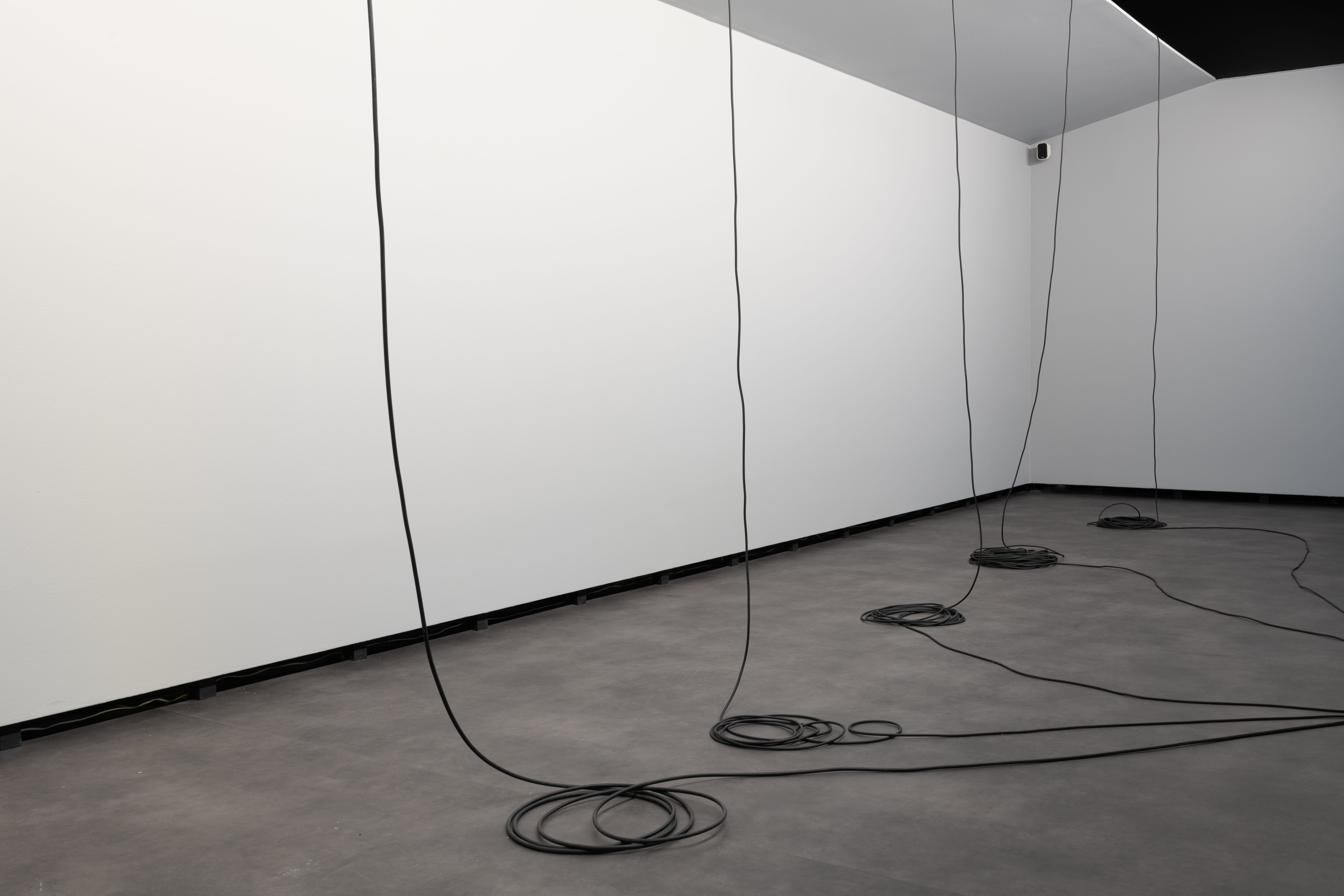
In this era, the body and flesh are erased and transformed into data and, as such, the true surveillant, or mere technocrat, is absent, bringing dehumanisation to the ultimate level. The ropes composing Isabel Cordovil’s installation are the arteries that support the only possible body (now a body without flesh) linking the images and sounds that are present to the rest of the world. At the same time, they are the literal image of hope linked to machines, dying and isolated in an ashen room, waiting to find out how we hope for hope or wrapped up in the cliché of waiting for a miracle.
Ana Cristina Cachola February 2024